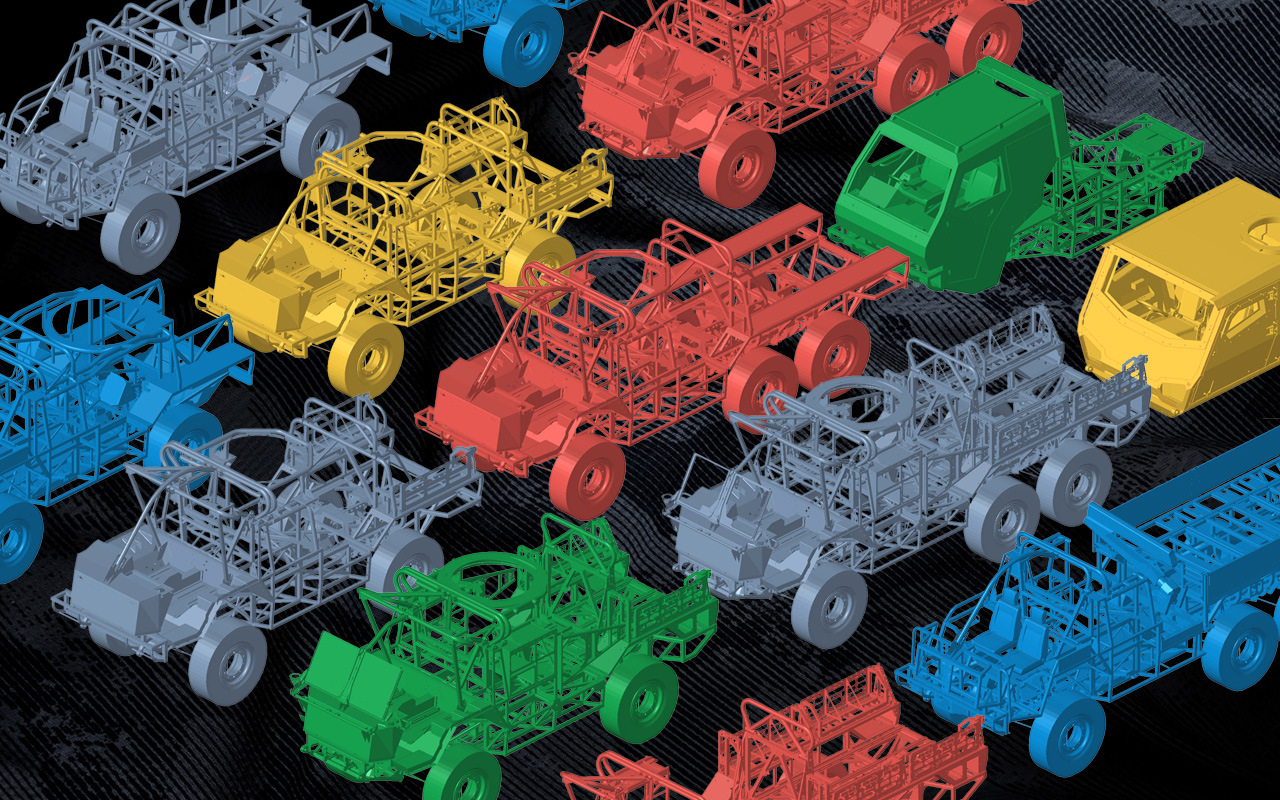
Use simulation to shape the design, not just assess it afterwards.
FEA can be introduced well before a design is frozen. By exploring load paths, material distribution and alternative concepts early in development, engineering teams can build structural efficiency into the design process rather than treating weight reduction as a late-stage exercise.
Optimisation can be used to generate concepts, refine geometry, compare alternatives and identify opportunities to improve structural performance and material efficiency.
Topology optimisation
Identify efficient material distributions within a defined design space and engineering constraints.
Design of experiments
Systematically explore how design variables influence structural performance.
Lightweight structures
Identify opportunities to reduce mass while satisfying strength, stiffness and other performance requirements.
Iterative development
Use simulation results to guide successive design refinements.
Let the load paths inform the geometry.
Topology optimisation starts from the available design space, constraints and performance objectives. The result is not normally a finished manufactured component; it is engineering information that reveals where material is structurally valuable and where design freedom exists.
From engineering objectives to a concept ready for detailed assessment.
Identify the design space
Establish the allowable volume, interfaces, non-design regions, loads and boundary conditions.
Define objectives
Specify optimisation objectives such as mass, stiffness, compliance or natural frequency, alongside the performance criteria the design must satisfy.
Consider manufacturability
Apply manufacturing constraints such as draw directions and minimum feature sizes, while considering assembly and accessibility requirements.
Engineer the concept
Work with the design team to translate optimisation results into practical, manufacturable geometry ready for detailed structural verification.
Explore our wider simulation services.
Want to explore more design options before cutting metal?
We can help define an optimisation or design-exploration study around the constraints that matter to your product.